 Enroll for our Perfect German A1 course now!..
Fast-Track Your German Fluency: A Step-by-Step Guide to Reaching B2
Achieving intermediate-to-advanced German proficiency (B1–B2) is one of the most effective investments you can make for your academic and professional career in Europe. Whether you are aiming to study tuition-free at a top public university or secure a technical job in Germany, reaching the B2 language milestone transitions you from basic survival phrases to professional independence.
Why B2 is the Key to Unlocking Opportunities
While A1 and A2 allow you to handle basic daily tasks like shopping or ordering at restaurants, B2 is the universally accepted standard across German institutions for meaningful integration:
- Career Opportunities: B2 proficiency allows you to participate in team meetings, handle client communications, and conduct technical work in German-speaking work environments.
- University Requirements: Most undergraduate and master's degree programs taught in German require at least a B2 or C1 certificate (telc Deutsch B2, TestDaF, or Goethe-Zertifikat B2).
- Permanent Residency & Citizenship: Demonstrating solid intermediate language proficiency significantly simplifies visa processing and naturalization pathways.
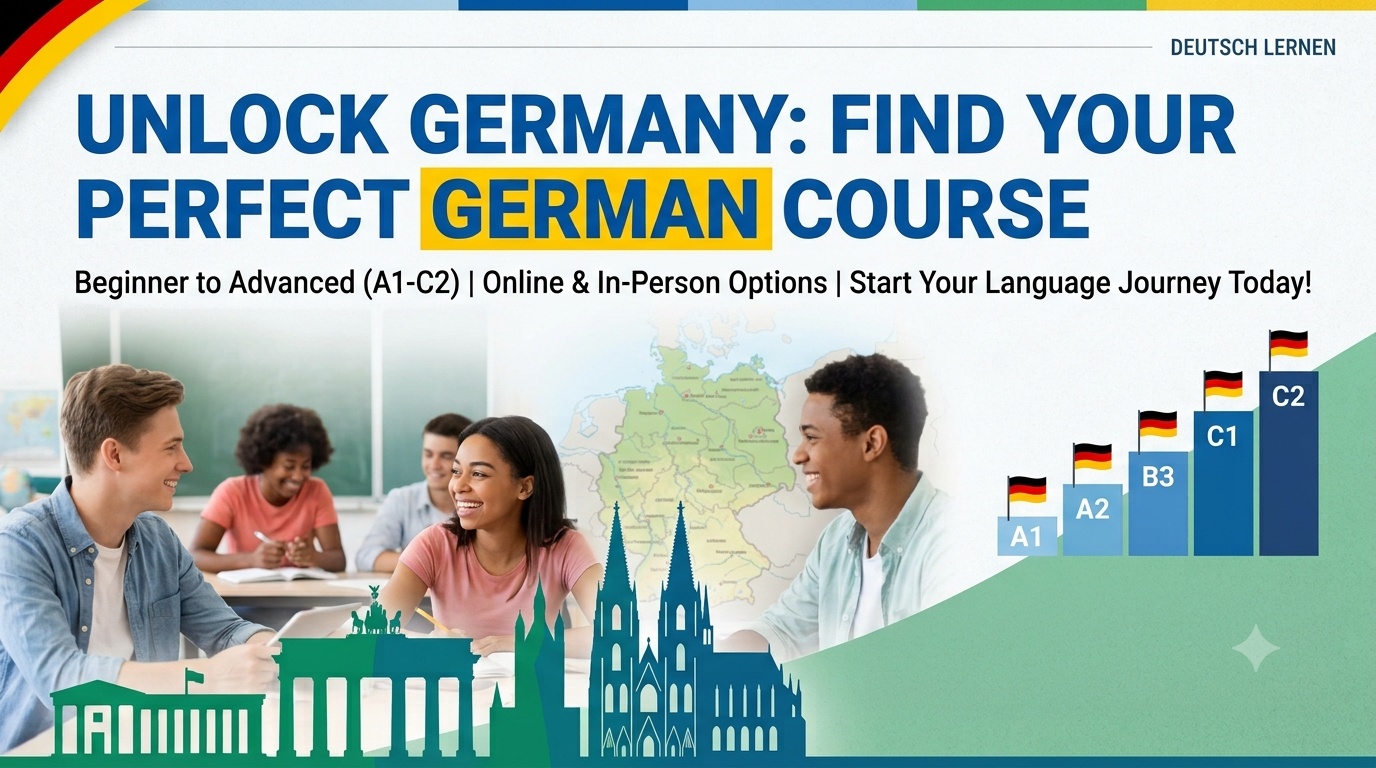
Recommended Learning Roadmap: Zero to B2
|
CEFR Level |
Target Timeline (Intensive) |
Key Focus Areas |
Outcome |
|
A1 – A2 |
2–3 Months |
Alphabet, basic grammar, sentence structure, daily vocabulary |
Basic everyday conversation |
|
B1 |
2–3 Months |
Complex tenses, subclauses, passive voice, professional emails |
Expressing opinions and handling work routines |
|
B2 |
3–4 Months |
Advanced vocabulary, idioms, debate, formal academic writing |
Full workplace and university readiness |
4 Non-Negotiable Features of an Effective German Course
Not all language courses yield equal results. To reach fluency efficiently without getting stuck in grammar loops, look for programs offering:
- Structured CEFR Curriculum: Ensure the course follows recognized guidelines so your completed modules directly align with official certification exams.
- Interactive Live Speaking Practice: Passive learning through apps alone will not build spoken fluency. Pick courses that mandate small-group or 1-on-1 speaking practice.
- Targeted Exam Preparation: The structure of exams like telc or Goethe requires specific exam techniques, time management, and writing structures alongside general language skills.
- Native or Bilingual Certified Instructors: Instructors who understand common pronunciation pitfalls and subtle nuance differences accelerate your natural phrasing.
Daily Habits to Double Your Learning Speed
- Switch Your Digital Environment: Change your phone, laptop, and social media display language to German.
- Listen to Native Audio Daily: Consume news podcasts like Deutsche Welle: Langsam gesprochene Nachrichten or Top-Thema during daily commutes.
- Maintain a Active Vocabulary Journal: Group new vocabulary by context (e.g., office vocabulary, academic phrases) rather than random isolated word lists.